
Friday, 27 November 2015

Audience research


(Photo taken from google.co.uk/images)

Audience research is used to collect information about how your demographic audience reacts to your product. It is used largely by production companies as it helps them see what their audience sector will be and how to reach them. For example audience research is used in film and television to see how certain audiences react to their film or television programme. It's also used to see if there is a slot in the market for the the product or production. 

There are many factors to consider when categorizing audiences. Age, gender, geodemographics, demographics, hobbies, social-economic classification and ethnographic are just some examples. Separating the audience into different categories makes it easier for companies to establish and target their demographic audience. 

Companies use a wide range of methods to collect the data they need. BARB is a popular method within television. BARB collects viewing figures for TV channels and programmes. Other methods of audience research are:
  • Quantitative and qualitative - Questionnaire and surveys 
  • Interviews and focus groups
  • Observations and inter-forums - Twitter, Facebook and YouTube


What is a demographic audience? A demographic audience or demographics profile is a large marketing tool used by companies. It is used to find out the products audience and how they can market it. Both product marketing companies and broadcasting groups hugely use demographic profiling. For example you wouldn't advertise a new horror film on a childrens channel as it wont reach the correct demographic audience. Demographic profiles are typical put into groupings of gender, age, ethnicity and social-economic. Social-economic classification is a combination of education, income and occupation. 
There are six main social-economic categories: 
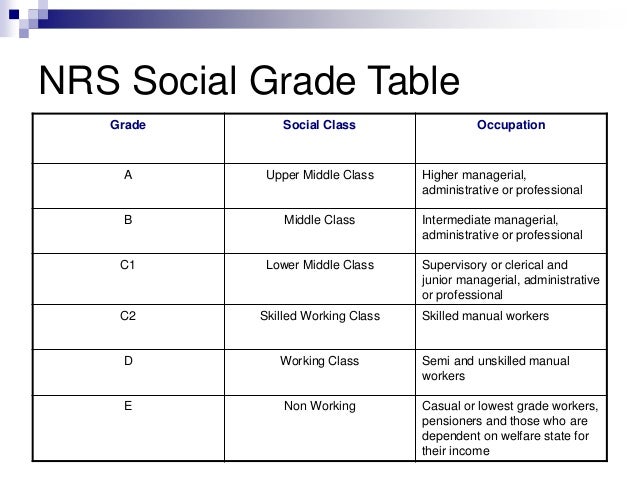
                (Photo taken from nrs.co.uk)


Information taken from:
http://www.slideshare.net/AnnieRose95/audience-research-22808080 

Friday, 13 November 2015

Data gathering research and Self-generated research


Examples of  data gathering techniques:


Interview (direct) - An interview if a formal discussion, usually videoed between one or more people. The interviewer/s ask the person/people question regarding something e.g a interviewer from a film magazine might be asking an actor about their upcoming movie. It is a verbal form of collecting data.


Registration - A form of registration research is getting a customer to fill out a form about their opinion of a product or service. It can also be used to gather peoples personal details.  

Questionnaire (indirect) - A questionnaire is a series of questions but the person/people answer in written form which differs from the interview technique which is verbal. 

Experimental - An example of experimental data gathering is selling a product for a trial based time to see how popular the product is and to see if its worth selling on a permanent basis. Another form of experimental research is some production companies release a film but before deciding on making it a sequel they see how the audience reacts to the first. 


Pros and cons of these techniques: 

Interview (direct) - The pros of doing an interview is that you can easily re-watch it over and over again. The cons of an interview is that it may be hard to find someone to interview or peoples schedules might not be the same. Another disadvantage is that if you want to write quotes or have a copy of the interview in writing you will have to watch it and make your own transcript.

Registration - A good reason to use a registration to collect the data you need is that you will have the information written down. Another pro of registration is you don't have to try and get someone to come to a location at a set time as they can do it from anywhere. 

Questionnaire (indirect) - A pro of collecting date indirecting instead of directly, for example like an interview is the sane reason as registrations the questionnaire can be filled out at anytime. However because of this they answers could be from multiple people. Another con of collecting data by questionnaire is that the answers won't be as detailed or long compared to a interview. 

Experimental - The pros of using experimental research to collect  the data is that you can fully see how your demographic audience will react to your product/service/video. A pro to doing a trail run is that it could be costly. 

Self-generated research: 

Self-generated research is collecting data from videos, photography or audio and other forms of media that you create by yourself. 


Examples:


Video

Photography 
Audio 
Articles 
Blog posts

Pros and cons of self-generated research:


The pros of collecting self-generated data is that you now where the information is from because of this you will know that it is reliable. However collecting data personally can also be a con as it may be biased and won't necessarily have a higher credibility. 


Information taken from:
http://people.uwec.edu/piercech/researchmethods/data%20collection%20methods/data%20collection%20methods.htm
http://www.slideshare.net/MrMightyMcD/research-unit-booklet 

Thursday, 1 October 2015

What is research and why do we carry it out:

Picture taken from Oxford dictionary 

Research is something you conduct to find out about and understand a specific topic, object, place etc. It is used to answer questions. For example if you had to write a essay about "What films came out in the 80's and what was the most popular?" you would research to find the facts and information you need.

Why do we carry out research? We carry out research because it is behind everything which makes it important. There are many reasons why research is important, for example it helps us develop personally and professionally. Research helps us develop personally and professionally by expanding our knowledge and improving our understanding on the subject. It also helps us improve professionally by finding out how to make our work better by being aware of more then one perspective.   

 There are many different types of research: 

Quantitative - Quantitative research is used to collect peoples opinions on a certain thing. It is usually conducted using questionnaires and surveys. It collects data in numbers and statistics. 

Qualitative - Qualitative research is mainly used for market research. It is used to find out why someone thinks or feels this way about something. 

Primary - Primary research is collecting the research yourself. It could be conducted using questionnaires, surveys or interviews. 

Secondary - Secondary research is using information you have found from existing research. For example archives and information from the internet. 

Research boards - Research boards such as BARB are used to collect data for other people. For example BARB collects television viewing figures for companies such as BBC, BSKYB and ITV. 

Self-Generated - Self-Generated research is where you gather the information yourself through video, photographs or audio. 

Audience - Audience research is where you get information from your demographic audience. For example if you are making a film for a specific age range you would present your idea to them and see what their opinions are.

Production - Production research is mainly used for plays. It is used to help you understand more about a play. For example you could research the influences and context of the play. 


Primary vs Secondary research:

The differences between primary and secondary research is when you conduct primary research you ask the questions and find the answers yourself whereas with secondary the questions have already been asked for you. Some of the advantages of using primary research over secondary is that because you are conducting the research yourself you know that it will be reliable. However an advantage of secondary research is that because someone else has already conducted the research so you wouldn't have to necessarily leave your computer to get the information you need. Another advantage is that the person that has conducted the research may have had access to more and the persific type people you may not have. 

Quantitative vs Qualitative: 

The differences between quantitative and qualitative research is quantitative is based on collecting data to be able to turn into a numerical chart for instance a pie chart whereas qualitative research is gathering someones opinions and a full length answer rather than one word. 

Quantitative or Qualitative questions: 


You have just done a questionnaire looking into how often people visit the cinema. In your opinion, would this be QUANTITATIVE research or QUALITATIVE research?

For a questionnaire regarding how often someone visits the cinema a quantitative formatted questionnaire would be used. This is because the question is how often which would be collected in numbers from a multiple choice e.g 1-3 times a month, 4-6 times a month etc. 


You have just done an interview looking into how often a single person visits the cinema. In your opinion, would this be QUANTITATIVE research or QUALITATIVE research?


An interview is usually used for qualitative research. Even though the question is similar it would generally be asked in an interview as on average how often do you go to the cinema in a month? which would be answered in a full sentence rather than ticking a box on a questionnaire as it is an interview rather than a questionnaire or survey.